
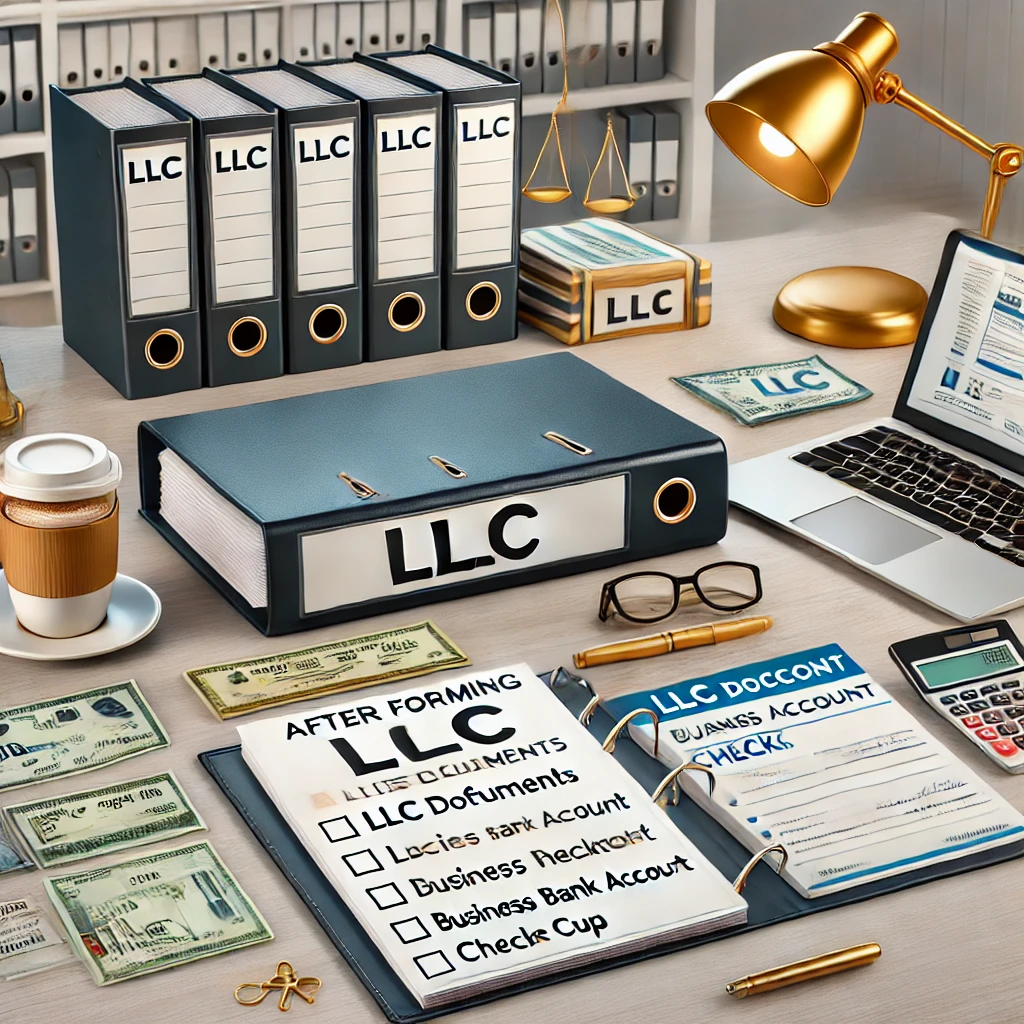
Congratulations on forming your LLC! This is an essential step toward protecting your personal assets and establishing a legal foundation for your business. However, the work doesn’t stop here. To ensure your LLC operates smoothly and complies with legal requirements, you must take several critical steps. Let’s dive into the key actions every LLC owner should take after formation.
1. Obtain an EIN (Employer Identification Number)
An EIN is like a Social Security Number for your business. It’s issued by the IRS and is required for:
- Opening a business bank account.
- Hiring employees.
- Filing business taxes.
How to Get It:
You can apply for an EIN online for free via the IRS website.
2. Open a Business Bank Account
Keeping your personal and business finances separate is essential for liability protection and bookkeeping accuracy.
Why It’s Important:
- Helps maintain your LLC’s limited liability status.
- Simplifies tax filing and financial tracking.
- Demonstrates professionalism to clients and vendors.
What You’ll Need:
- Your LLC’s Articles of Organization.
- EIN.
- Operating Agreement (if required by your bank).
3. Draft an Operating Agreement
An Operating Agreement outlines your LLC’s ownership structure, roles, and decision-making processes. While not always legally required, it’s highly recommended.
Key Components:
- Member roles and responsibilities.
- Profit and loss distribution.
- Decision-making protocols.
- Procedures for adding or removing members.
This document prevents disputes and provides clarity as your business grows.
4. Register for State and Local Taxes
Depending on your business and location, you may need to register for additional taxes, such as:
- Sales Tax: If you sell taxable goods or services.
- Payroll Tax: If you have employees.
- Franchise Tax: Required in some states for LLCs.
Tip: Check with your state’s business or revenue department for specific requirements.
5. Obtain Necessary Licenses and Permits
Ensure your LLC complies with federal, state, and local licensing requirements.
Examples:
- Professional licenses (e.g., real estate, healthcare).
- Health permits for food-related businesses.
- Zoning permits for physical locations.
Failure to obtain the proper licenses can result in fines or business closure.
6. Maintain Compliance with Annual Requirements
Many states require LLCs to file an Annual Report and pay a renewal fee to stay active.
Key Steps:
- Track your filing deadlines.
- Update your registered agent if needed.
- Keep your business information current.
Set reminders to avoid penalties for missed filings.
7. Purchase Business Insurance
Protect your LLC from potential risks by securing the right insurance coverage. Common policies include:
- General Liability Insurance: Covers lawsuits and property damage.
- Professional Liability Insurance: Protects against claims of negligence or errors.
- Workers’ Compensation Insurance: Required if you have employees in most states.
Evaluate your risks and consult an insurance professional to find the best policies.
8. Set Up a Record-Keeping System
Good record-keeping is essential for legal compliance, tax preparation, and business planning.
What to Track:
- Financial transactions.
- Contracts and agreements.
- Tax filings and licenses.
- Meeting minutes (if applicable).
Consider using accounting software or hiring a bookkeeper for accurate tracking.
9. Develop a Tax Strategy
As an LLC, your taxes depend on how you choose to be taxed (e.g., sole proprietorship, partnership, or S-Corp).
Steps to Take:
- Work with a tax professional to understand your tax obligations.
- Plan for quarterly estimated tax payments.
- Maximize deductions specific to your business activities.
A proactive tax strategy can save you money and prevent surprises.
10. Start Building Business Credit
Establishing business credit can help you secure loans or lines of credit for future growth.
How to Build Credit:
- Open a business credit card.
- Pay vendors and suppliers on time.
- Register with business credit bureaus like Dun & Bradstreet.
Strong business credit separates your personal credit from your LLC’s finances.
11. Create a Marketing Plan
With your legal and financial systems in place, it’s time to focus on growth. Develop a plan to promote your LLC, including:
- A professional website and social media presence.
- Networking with potential clients and partners.
- Advertising and email campaigns.
Consistency in marketing is key to building your brand and attracting customers.
Final Thoughts
Forming an LLC is an exciting milestone, but it’s only the beginning. Taking these steps ensures your business is legally compliant, financially organized, and well-positioned for success. Whether you’re a solo entrepreneur or part of a larger team, proper planning and execution will set your LLC on the path to long-term growth.
Need help navigating these steps? Reach out for expert guidance!



No comment yet, add your voice below!