
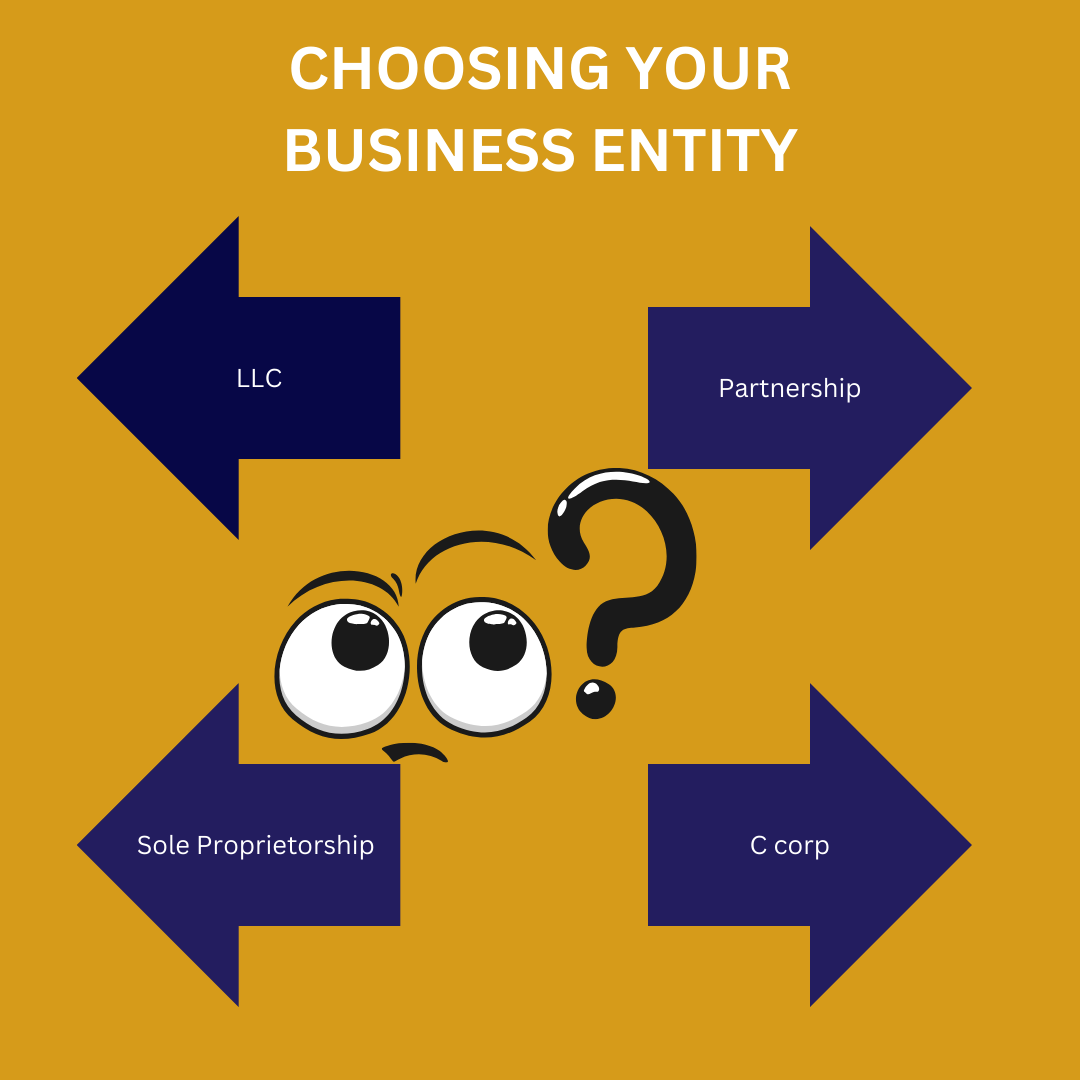
Starting a business is an exciting journey, but one of the most critical decisions you’ll face early on is choosing the right entity. The type of business entity you select impacts your taxes, liability, and overall operations. Here’s a breakdown of the most common options to help you make an informed choice.
Key Considerations When Choosing a Business Entity
- Liability Protection: How much personal liability are you willing to take on?
- Tax Implications: Do you want your business income taxed at the corporate or individual level?
- Flexibility: Will the structure grow with your business?
- Ownership: How many people will own the business?
- Compliance: How much paperwork and formalities can you manage?
Types of Business Entities
1. Sole Proprietorship
- Best For: Single-person businesses or side hustles.
- Key Features:
- Simplest and cheapest to form.
- The owner and the business are the same legal entity.
- All profits and losses are reported on the owner’s personal tax return.
- Pros:
- Easy setup.
- Minimal regulatory requirements.
- Cons:
- Unlimited personal liability for business debts and obligations.
- Limited ability to raise capital.
2. Partnership
- Best For: Two or more people starting a business together.
- Key Features:
- General partnerships involve shared ownership and liability.
- Limited partnerships allow some owners to have limited liability.
- Pros:
- Shared responsibility and skills.
- Pass-through taxation (income is taxed at the individual level).
- Cons:
- Shared liability in general partnerships.
- Potential conflicts among partners.
3. Limited Liability Company (LLC)
- Best For: Small to medium-sized businesses seeking liability protection and tax flexibility.
- Key Features:
- Combines the liability protection of a corporation with the tax benefits of a sole proprietorship or partnership.
- Profits and losses can pass through to owners (members) or be taxed as a corporation.
- Pros:
- Limited liability for owners.
- Flexible tax options.
- Fewer formalities than corporations.
- Cons:
- More paperwork and fees than sole proprietorships and partnerships.
4. S Corporation (S-Corp)
- Best For: Small businesses with profits that qualify for pass-through taxation.
- Key Features:
- Allows pass-through taxation while providing liability protection.
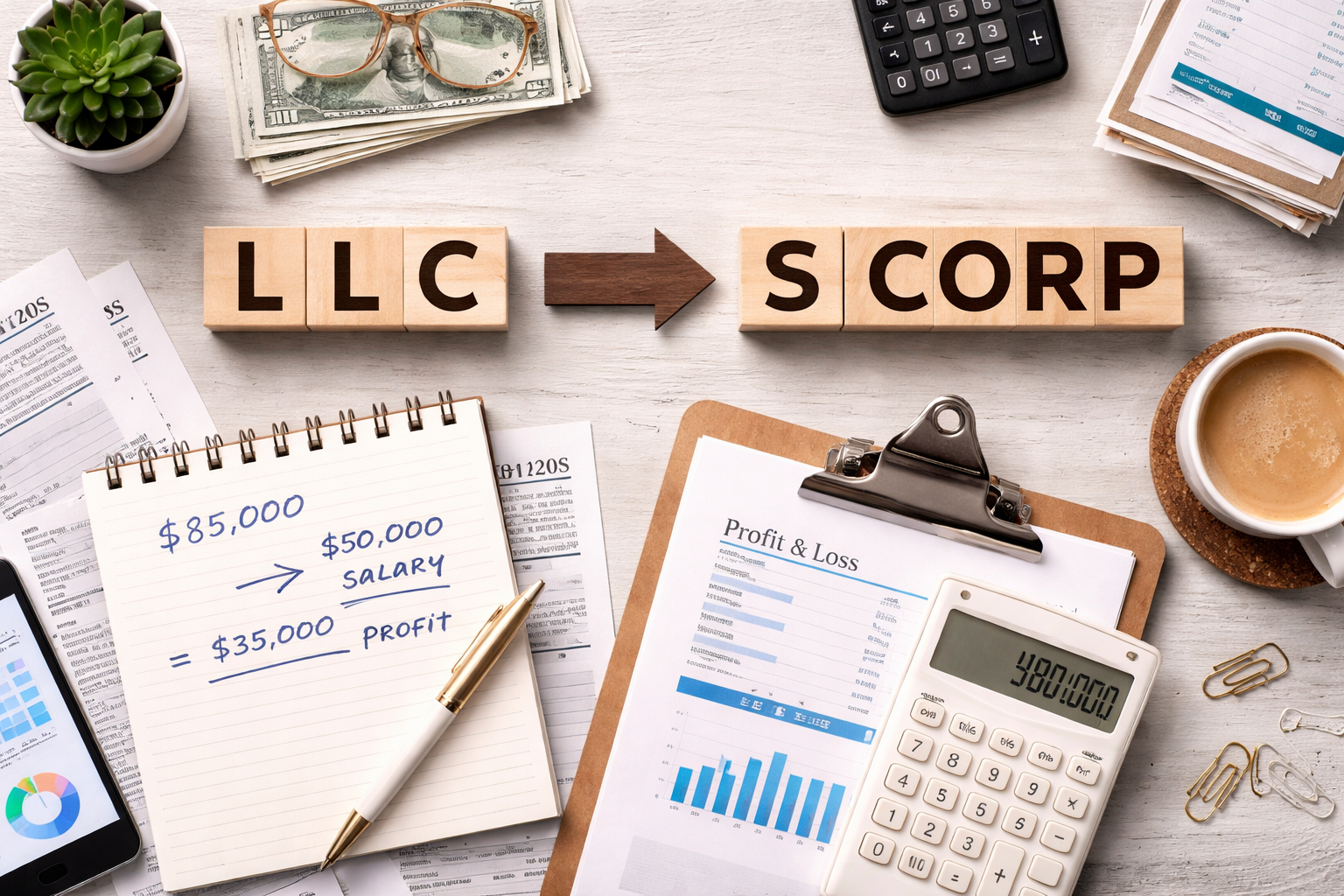
- Owners can save on self-employment taxes by taking a reasonable salary and dividends.
- Pros:
- Avoids double taxation.
- Tax savings on self-employment taxes.
- Cons:
- Strict eligibility requirements (e.g., a limit of 100 shareholders and no non-resident owners).
- Requires more formalities than an LLC.
5. C Corporation (C-Corp)
- Best For: Larger businesses planning to scale or seek investors.
- Key Features:
- A separate legal entity that pays corporate taxes on its income.
- Unlimited growth potential with no restrictions on shareholders.
- Pros:
- Strong liability protection.
- Easier to raise capital through stock issuance.
- Cons:
- Double taxation (corporate income and dividends).
- Extensive compliance and record-keeping requirements.
Which Entity Should You Choose?
1. Small Business or Side Hustle
- Recommended: Sole Proprietorship or LLC.
- Reason: Keep things simple while you validate your business idea.
2. Growing Business with Partners
- Recommended: LLC or S-Corp.
- Reason: Offers liability protection and pass-through taxation.
3. High-Growth Startups Seeking Investors
- Recommended: C-Corp.
- Reason: Easier to attract investors and issue stock.
4. Real Estate Investments
- Recommended: LLC.
- Reason: Protects personal assets while allowing tax flexibility.
Consult a Professional
Choosing the right entity depends on your unique business goals, industry, and financial situation. Consulting a tax professional or business attorney can help you evaluate your options and avoid costly mistakes.
Final Thoughts
Your business entity is the foundation of your company’s structure, so take the time to research and choose wisely. Whether you’re just starting out or considering restructuring, the right entity can save you money, protect your assets, and set your business up for long-term success.
If you need help navigating this process, feel free to reach out for expert advice tailored to your business needs!



No comment yet, add your voice below!